belong to world
The art of hospitality: the gaze that creates connection
Federico Menetto in conversation with Will Guidara, The Bear, and the culture of Teddy

To truly explain the concept of hospitality, Federico Menetto—consultant for the development of business projects in the food & wine and hospitality worlds—starts from that distinctly Italian tradition of saper fare (“knowing how to do”), which often goes hand in hand with saper accogliere (“knowing how to welcome”). “Hospitality doesn’t just mean welcoming someone into a place,” he explains. “It means opening an inner space: making room within yourself so that the other person can truly enter.”
According to Menetto, hospitality is born from a human and far from obvious gesture: the ability to fall in love with people, even if only for a moment. That is where generosity begins. “We all know how to recognize hospitality when we encounter it, even though explaining it is extremely difficult. It’s a way of looking at the other person, of grasping their desire even before it is expressed.”

Furthermore, in its etymological meaning and in the way hospitality has evolved over time, the root of the word points to an act of responsibility and care: “To take care of a person means to take care of their desire. I always tell young people: try to bet on the feeling with which someone enters a restaurant. If a person is in a hurry, welcoming them doesn’t mean offering a thousand perfect alternatives, but looking at what they truly need.”
For Menetto, the gaze represents the starting point. “Hospitality is a bet on the feeling that precedes the encounter. It means interpreting a need before it is expressed, reading between the lines.”

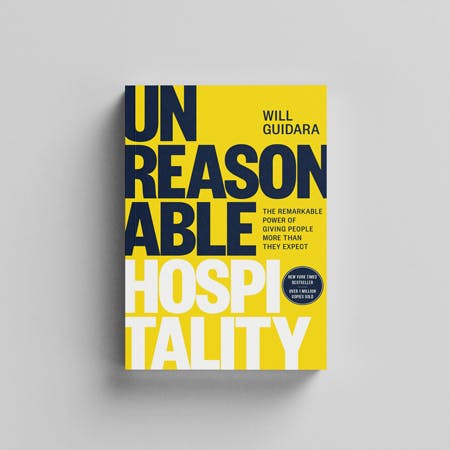
This is the same principle that Will Guidara (entrepreneur and co-owner of the group that managed Eleven Madison Park) describes in his book Unreasonable Hospitality, when he talks about the art of “reading the table” as that intuition that allows one to anticipate a need, transforming simple service into a memorable experience. His account of the Eleven Madison Park restaurant shows how a carefully prepared surprise—an improvised dessert, a complimentary bottle, an unexpected gesture—can turn a dinner into an indelible memory. But there is more: Guidara clearly argues that hospitality is about the desire to take care—“I care that you are here and that you feel well.” As simple as it may sound, this intuition led Eleven Madison Park to become one of the best restaurants in the world, a place where care becomes a vehicle for encounter and connection. Guidara also adds a fundamental warning: “You can’t expect your team to treat guests in a way that they themselves are not treated.”
This brings us to a crucial question: if hospitality is a human trait, even if not common to everyone, how do we learn to look at others in this way?
“We live shielded by a thousand layers that distance us from others,” Menetto continues. “We are multitasking, distracted. Those who host must know how to read this new human condition. I find it unwelcoming to judge contemporary habits, such as using a phone during lunch. Truly welcoming means starting from the person as they are, not as we think they should be. Not everyone is naturally hospitable, but you can train yourself. Hospitality is a cultural strategy that can be adopted. Being kind is not enough, and it’s not just about empathy: it’s a choice, a character you give to a company. It has more to do with design—the way you think about spaces and relationships—than with simple kindness.”

This same theme is explored in one of the most intense episodes of the series The Bear, “Forks,” an episode that unfolds amid chaos, family wounds, and sudden reconciliations. In that story, hospitality is not perfect service, but an act of emotional recognition. A gesture that tries to make space for someone even when it is difficult. It is a radical and revolutionary choice: hospitality is born when one chooses to truly see the other.
For us at the Teddy Group, who have placed hospitality at the center of our purpose, together with the desire to dress the world in beauty, this aspect is a fundamental node in our growth journey. Not only understanding the deep meaning of welcoming, but making it alive, transmissible, and shareable by all our collaborators. For us, hospitality is a kind of ideal of encounter—a way of making others feel recognized, respected, and valued, whether we welcome them into our offices, our online stores, or our physical points of sale. Not as a ritual or a habit, but as an authentic way of looking, capable of generating trust and creating lasting bonds.
But what truly eliminates distance? And above all, in the world of companies—where everything seems to have to follow a model—how do you integrate something as fluid and dynamic as hospitality into a concrete strategy?
“Hospitality is part of a strategy,” Menetto admits, “and it brings enormous advantages: it creates added value that would otherwise be difficult to achieve. But it is not a process. This is where many managers make a mistake: they confuse hospitality with a culture of perfection. Hospitality is the culture of error, of freedom. People are imperfect, and so are we who welcome them. You cannot be hospitable while ignoring your own imperfection.”

Error is not failure, but a language. It is that margin of humanity that allows an encounter to truly happen. In this sense, Guidara and The Bear say the same thing: there is no “perfect service” without a vulnerable heart.
So, if Guidara teaches us that hospitality transforms a space into a relationship, and The Bear that such a relationship can emerge even from chaos, then our daily task is to bring this gaze into every place in which we operate.
It is a gesture that changes the relationship between people, and consequently also the bond with the brand. And it is there that the encounter becomes an authentic relationship.