belong to history
Dressing the World with Beauty: A Family Story, a Legacy of Meaning
Two visions, one shared purpose: Emma and Cristiana Tadei reflect on what it means today to embody and convey beauty—through family memories, daily work, and shared responsibility. A profound reflection on corporate purpose as both an educational and human lever.
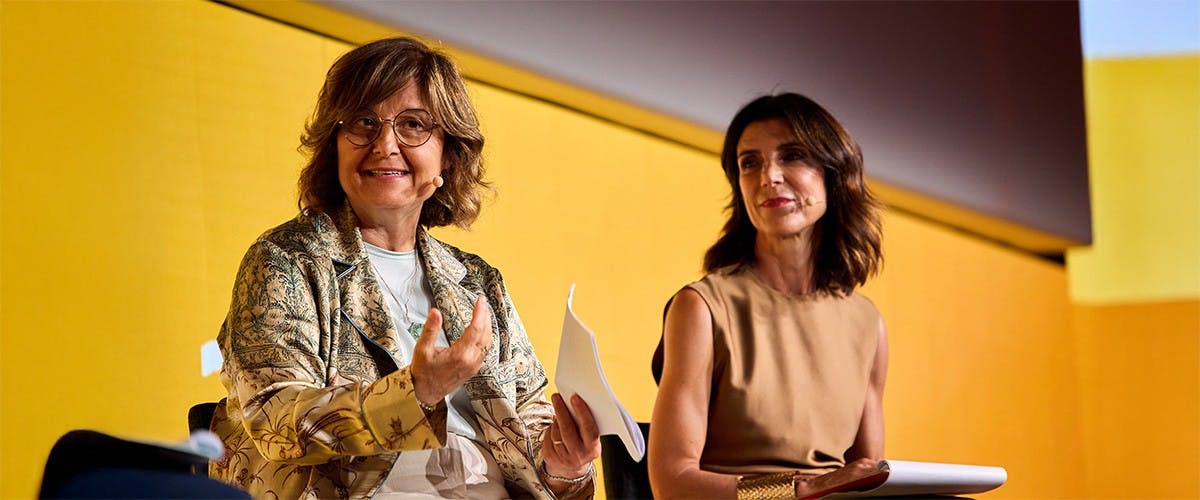
“Is it possible to dress the world with beauty?” The answer we’re discovering together is yes—so long as each of us discovers and expresses our own unique idea of beauty.
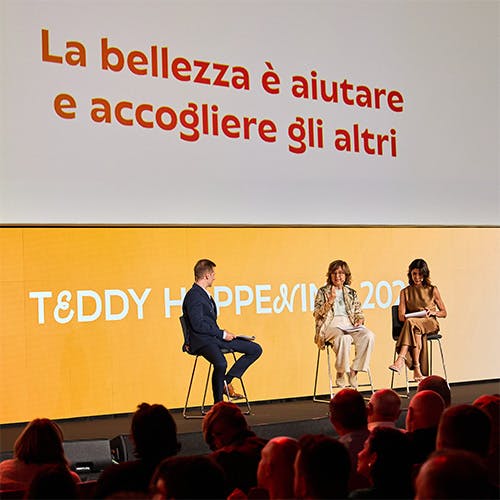
This reflection underpinned the latest Teddy Happening, the annual gathering that brings together people from across the company in a moment of listening, dialogue, and shared vision. It was also the occasion to unveil the company’s newly defined purpose—“to dress the world with beauty and hospitality, fostering personal fulfillment”—with a particular focus on the concept of beauty—not merely as a declaration, but as a concrete invitation to interpret, live, and enact beauty in all its forms.

On stage were two special figures: Emma and Cristiana Tadei, daughters of the founder Vittorio Tadei, serving respectively as President of T&M Holding and Art Director & Head of Communications at Calliope. They are not only professionally engaged within the company, but also carry forward a legacy of values rooted in work, passion, and a sense of beauty.
Despite sharing the same background, their visions of beauty are distinct.
Everyday Beauty: Care, Gestures, Attention
Emma reflects: “What comes to my mind instinctively is a beautiful landscape, a work of art, a piece of jewelry, a beautiful dress. When someone brings passion, heart, talent, something beautiful emerges. But for me there’s another kind of beauty—the more everyday beauty, made up of small moments, simple gestures: a morning greeting when starting work, or a detail in daily work.” This is a beauty that makes no noise, but leaves a mark. Beauty, for Emma, is more than what strikes at first glance—it is what often goes unnoticed yet builds connections. It is silent beauty, rooted in sincere relationships and attention to detail—a beauty that speaks of community.
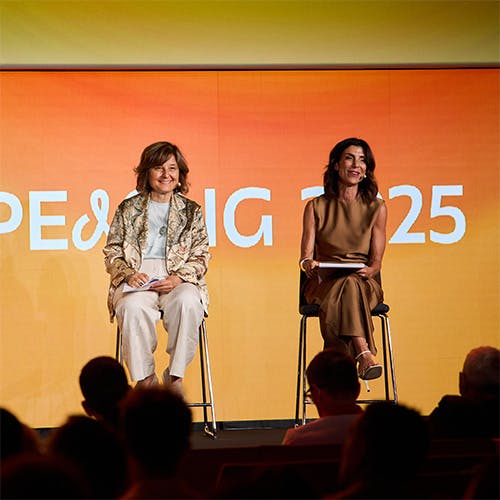
Beauty as Warmth and Sensory Harmony
Cristiana (“Chicca”) shares: “The first thing I think of is a set table—particularly our family Christmas table. It’s meant to welcome. I enjoy thinking of everyone who will sit there, big and small, caring for colors, the tablecloth, plates, glasses. For me beauty is something harmonious: a blend of shapes, sounds, colors, scents. It isn’t just aesthetics, but thoughtfulness and attention toward others.”
These two visions, seemingly apart, converge in portraying beauty that doesn't impose—it offers. Not measured, but shared. A beauty that resides in care and the intent to welcome the other.
Gaze That Teaches Us to See
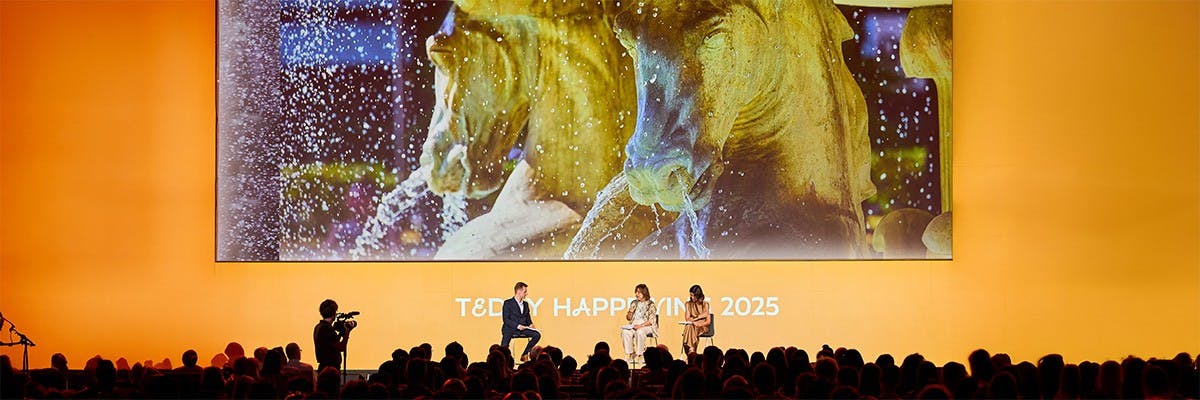
To Emma, a symbolic memory is of the Four Horses Fountain in Rimini: “I was walking there with my grandson on our way to see the Frecce Tricolori. Suddenly he wanted to see the fountain because ‘the horses blow water from their nostrils.’ We sat at the edge; he said, ‘Grandma, look: one is tired, one is old, one is young—the pony!—and the other is happy.’ I was amazed. Through his eyes, I saw what I hadn’t seen before. To me, that is beauty: learning to see what I had never noticed, through a child’s curious eyes.” This perspective—renewed through affection—teaches us to perceive the poetry in everyday life. A silent epiphany reminding us that beauty often just needs new eyes to be recognized.
Beauty as Legacy of Meaning
What is beauty of meaning? It’s not merely pleasing form or aesthetic result—it’s a beauty that has significance, aligns with what we believe, rooted in deep intention. It guides choices, embodies responsibility, and brings positive impact. It is the most authentic legacy of Vittorio Tadei.
Chicca remembers: “Our father was far from a cover-person. He didn’t care about appearances—he said he wanted to create democratic fashion. But he had an extraordinary ability: to see the beautiful and positive even in tough times. He built something big—not for himself, but for everyone who wished to embark on the journey. He taught us to be bearers of authentic beauty, not stereotypes.”
Emma adds a more tangible dimension of their relationship:
“He passed on to me the beauty of organizing and initiative. As a child, I set up a little stand in our garden, selling old toys and magazines. If something didn’t sell, the next week I’d lower the price—because I had seen him do it. Above all, he taught me that one can build a profitable enterprise, but also give back part of the value created to the less fortunate. To me, that is beauty.”

A Beauty Built Every Day
For them both, this legacy lives on in the company’s daily life. Emma says: “For me, Teddy isn’t just an economic engine—it’s a human engine. I remember early 2000s trips with the Rinascimento team to fashion capitals: waking up early, flights, long walks for inspiration and innovation. When a garment you designed goes from your hands to the customer’s, you know you hit the mark. Today my role has changed, but the beauty in supporting people daily in the challenge of interpreting a difficult market remains. It’s the belief that we can succeed.”
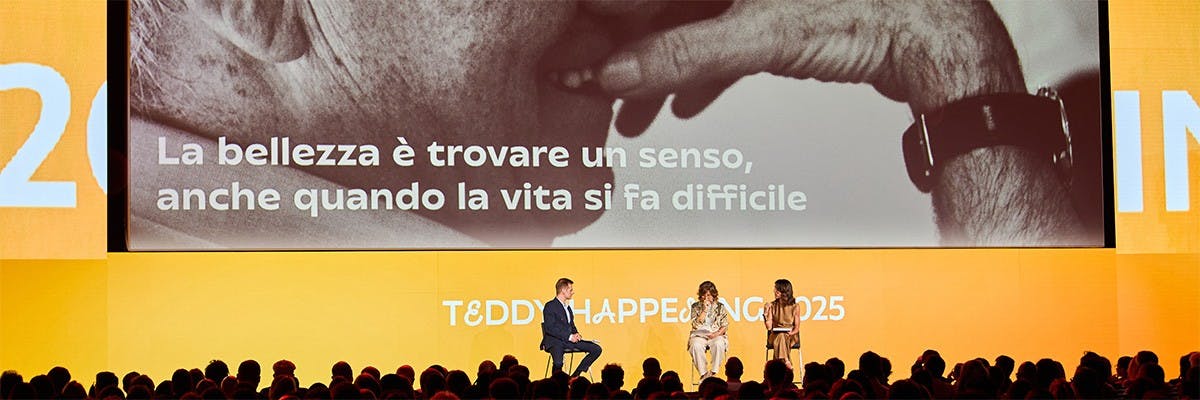
Chicca adds: “In my work, beauty is the red thread that connects everything: images, layouts, materials, lighting, packaging, tags. Everything must speak the language of beauty. But mostly, it’s the ability to be amazed. When something moves me, I know it will also move the customer. Our job is to create balance between aesthetics and emotion, attuned with those who choose us.”
Educating Toward Beauty: A Collective Responsibility
Their reflections go beyond personal testimony—they crystallize into a broader awareness: beauty is an educational force. A language that can inspire, welcome, guide. A responsibility any enterprise can choose to embrace. As the moderator concludes: “From listening to you, I clearly felt that the work of discovering, expressing one’s own idea of beauty has an educational function. And I believe this is a powerful message—a message your father would undoubtedly have approved, because he clearly understood the educational role a company can play towards its people and society.”
So yes: dressing the world with beauty is possible—if each of us, every day, chooses to cultivate our own idea of beauty, live it authentically, recognize it in others. It’s a silent yet concrete call to action—the most ambitious and humane challenge a company can undertake.
Educare alla bellezza: una responsabilità collettiva
Le parole di Emma e Chicca non sono state solo una testimonianza personale. Hanno dato corpo a una consapevolezza più ampia: la bellezza ha un potenziale educativo. È un linguaggio che può ispirare, accogliere, guidare. È una responsabilità che ogni impresa può scegliere di assumersi.
«Ascoltandovi» – ha concluso il moderatore Daniele – «ho avuto chiara la sensazione che il lavoro di ricerca, scoperta ed espressione della propria idea di bellezza abbia una funzione educativa. E credo che questo sia un messaggio potentissimo. Un messaggio che vostro padre avrebbe sicuramente approvato, perché aveva ben chiaro il ruolo educativo che un’impresa può avere verso le sue persone e verso la società».
E allora sì: vestire il mondo di bellezza è possibile. A patto che ognuno, ogni giorno, scelga di coltivare la propria idea di bellezza, di viverla in modo autentico, di riconoscerla negli altri. È una chiamata all’azione silenziosa, ma concreta. È la sfida più ambiziosa, e più umana, che un’azienda possa porsi.