belong to everyone
Care as a driver of skills and meaning: why the world of work needs all that we are
Why recognizing the human and relational dimension of people can transform work into a space of growth, well-being, and innovation.
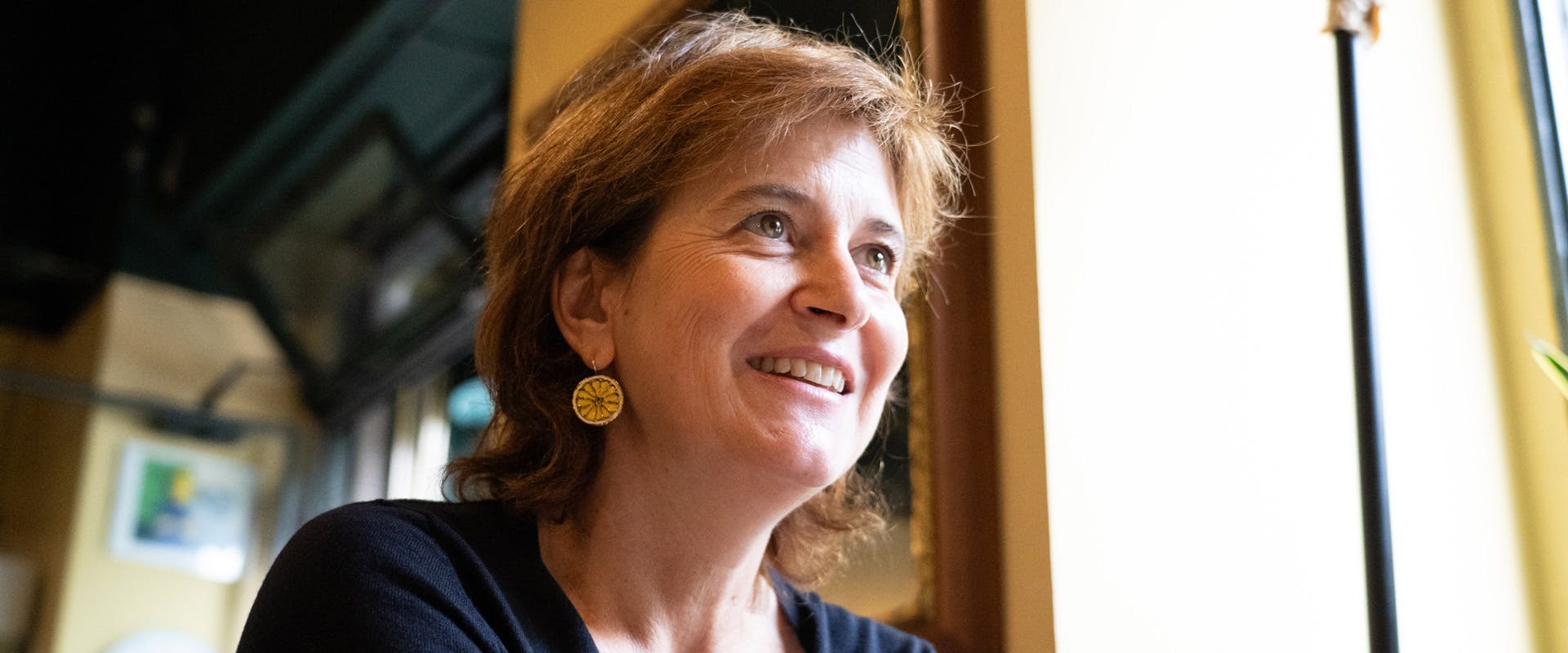
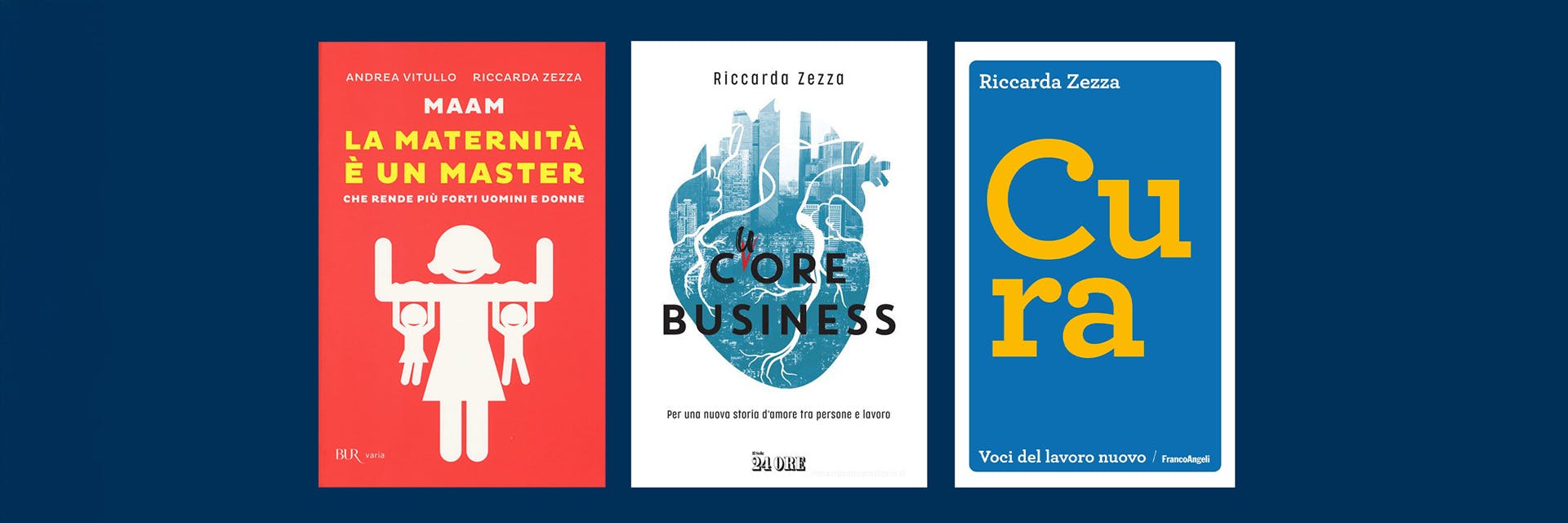
Among the voices that populate Belong, we want to give space to those who, with clarity and passion, know how to interpret the transformations of contemporary work and articulate them with new words. Riccarda Zezza is one of these voices. An author and researcher with a background in behavioral neuroscience, she founded Lifeed.io and developed the concept of "transilience." She conducts research on how life experiences transform into professional skills. Author of "Maam, Motherhood is a Master" (2015), "Cuore Business" (2024), and "Cura" (2025), she writes for publications such as Vita, MIT Technology Review Italia, and Fast Company, translating her scientific research into reflections on the relationship between life and work.
by Riccarda Zezza
We are the saddest workers in Europe. The Gallup report on the "State of the Global Workplace" says so: 21% of Italians experienced intense sadness during the previous workday. One in five. And this sadness does not even turn into constructive anger: we have resigned ourselves to a fate of permanent dissatisfaction, as if it were normal to feel bad at work.
Then there is an even more alarming figure: only 10% of Italian workers declare themselves "highly engaged" in their work. Global average: 23%. European average: 13%. We are last. We work as if we had no other choice, giving less than we could.
The Identity Iceberg
The problem is not a lack of skills or motivation: it is that we ask people to leave the richest part of themselves outside the office door. Today, thanks to data collected by the Lifeed Observatory from over 70,000 people, we know that while we spend nearly two-thirds of our time working, we express 60% of our skills only in extra-professional roles.
The numbers speak clearly: for example, among 1,800 young professionals at a consulting firm under the age of 30, only 9% of those who define themselves as affectionate express this trait at work, and only 14% of those who consider themselves caring are also so in the office. And we are talking about the same people who are asked to be empathetic, relational, and creative.
The contradiction is blatant: organizations desperately seek soft skills—empathy, relational abilities, creativity, resilience—but they create environments where these qualities struggle to emerge because they are considered "personal," and therefore out of context.

A few years ago, Professor Joseph Fuller of Harvard Business School published a report that made waves: American companies did not know that 73% of their employees were caregivers in some way. Not just parents: children assisting elderly parents, partners supporting companions with difficulties, people caring for fragile family members.
This invisibility carries weight. Companies invest millions in benefits that remain unused because they do not respond to real needs; they accumulate hidden costs due to turnover, loss of knowledge, absenteeism, and "presenteeism"—being present but unproductive. According to McKinsey, 60% of the factors predicting burnout fall under "toxic" workplace behaviors.
But when did it become normal to think that work should make us unhappy?
The First Crisis: We Don't Know How to Take Care of Ourselves
We live in an era of individualism, yet we do not know how to take care of ourselves. In a survey, we asked: "Who do you take care of in the workplace?" Customers came in first, colleagues second, collaborators third. And ourselves only last—with a score so fragmented it suggests that, quite simply, we never think about it.
How can we create workplaces based on care if we don't know how to take care of ourselves? People who know how to care would never create care-less places. The crisis of care thus begins with our inability to see and value ourselves—with our vulnerabilities, our complexity, and our different dimensions of life.
Five Reasons Why We Don't Practice Care at Work
In the book "Cura," I describe the five main obstacles cited by people to justify the absence of care in the workplace:
It costs time. "I don't have time," "There is too much frenzy." True: taking care requires time. But attention matters more than quantity. Research says it takes only 40 seconds to show empathy. But we have lost the habit of slowing down.
It costs emotionally. "I don't want to expose myself," "I lack healthy boundaries." Emotional effort seems increasingly burdensome within the sense of hurry that has become physiological. But emotions are there anyway: ignoring them doesn't eliminate them; it makes them toxic and causes long-term damage.
The culture is against it. "I am not allowed," "I encounter resistance." Implicit rules tell us not to slow down, not to hesitate, not to worry about others more than necessary. Who has the courage to break these patterns?
The bystander effect. In no other context would it seem normal to ignore someone's difficulty as it does at work. In offices, the "bystander effect" occurs: the more people are present, the less responsible one feels to intervene.
Hierarchies allow it. Cohorts of narcissistic leaders have popularized the idea that great talent corresponds to great temperamental outbursts. To the point that it has become necessary to add "kind" to "leader" to limit abuses.
Toward a New Pact Between Life and Work
The new ESG metrics introduced by Europe in 2024 are broadening the perspective: no longer just health and safety, but support for mental health, work-life balance, and the development of people as a whole.
This is the opportunity to invest in a more updated vision of who people are today: not fungible resources to be optimized, but complex human beings whose lives intertwine with work in increasingly sophisticated ways.
Organizations that see this complexity as a wealth—rather than a problem to be managed—will have an enormous competitive advantage because they will have people who are more engaged, more present, and who feel authorized to bring all of their talent.
The Hidden Revolution: Life Enriches Work
In this direction, there is good news: science says that having different roles does not take away resources; it generates them. Science calls this "role enrichment": being a child does not subtract skills from the professional, it adds them; being a caregiver does not diminish competencies, it multiplies them. A mother managing domestic crises develops problem-solving under pressure; a child assisting an elderly parent refines empathy and negotiation skills; a person going through a loss learns a resilience that no course could ever teach.
Seen this way, these are not "personal experiences to be left outside," but training grounds for universal skills. For them to work, however, one must learn to recognize, name, and consciously transfer them from one context to another: this is the purpose of transilience.
Care as a Strategic Lever for the Future
Taking care pays off: not just ethically, but economically. Research shows that the capacity for care measurably reduces despair and depression. Environments based on care have lower turnover, higher productivity, and greater innovation. Of course, in the short term, care "costs" (time, attention, increased complexity), and we live in a world that thinks in quarters. How do we justify an investment whose fruits are seen in the medium-to-long term?
Perhaps we should flip the question: What data tells us that the absence of care pays off?
Looking at the numbers of unhappiness, disengagement, and burnout, the answer is clear: we can no longer afford the absence of care in the world of work.
As Mary Catherine Bateson writes, "We need attention and empathy wherever other living beings meet, to nurture and protect all that we hold dear: factories and laboratories as much as homes and neighborhoods."
Perhaps it is time to admit that people are not icebergs of which we can only afford to see the tip: they are whole human beings, who always carry with them all that they are. And what they learn from their "invisible" experiences—even those of care, perhaps especially those—is exactly what organizations need most today to survive and thrive in a world of constant change.