belong to world
Babel or Jerusalem: The Person at the Center in the Era of AI
Leo XIV's first encyclical on artificial intelligence is not a condemnation, but a question—the same question that Vittorio Tadei's Dream has tried to keep alive for over sixty years
On Belong, we like to give voice to authors who know how to read the present; Marco Bardazzi is one of them. Co-founder and Editor-in-Chief of Bea Media Company, he is a journalist, writer, and corporate communicator with forty years of international experience. Prior to founding Bea, he was EVP Communications Director at Eni. He worked as a journalist at ANSA and La Stampa, based in Italy and the United States. He writes about America in Il Foglio and covers it on Chora Media's podcast Altre/Storie Americane. He has published books on the US, corporate stories like Il socio di minoranza, and journalism, as well as edited biographies. He is a professor in the Journalism Master's program at Università Cattolica in Milan and of Brand and Corporate Narratives at IULM University.
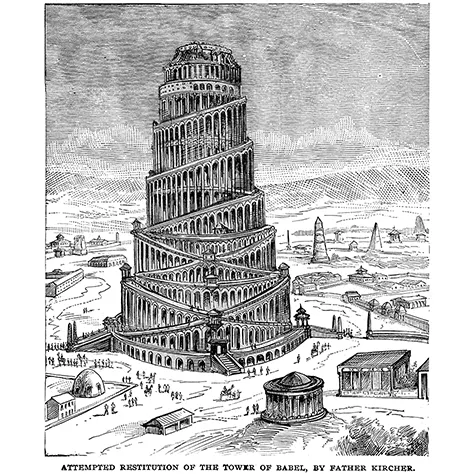
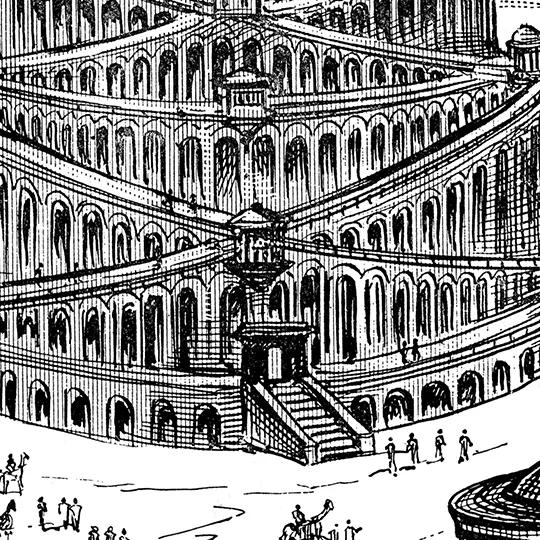
The world was bracing for an excommunication. For months, while the Vatican worked on the text and consulted leaders of major tech companies, the expectation was an anathema: the Church against machines, the Pope against Silicon Valley. When Magnifica Humanitas was published on May 25, 2026, the internet reacted automatically, enlisting it into the anti-AI resistance: memes, Tolkien quotes, calls to "disarm" artificial intelligence, and the Tower of Babel wielded as a manifesto. Convenient, but reductive.
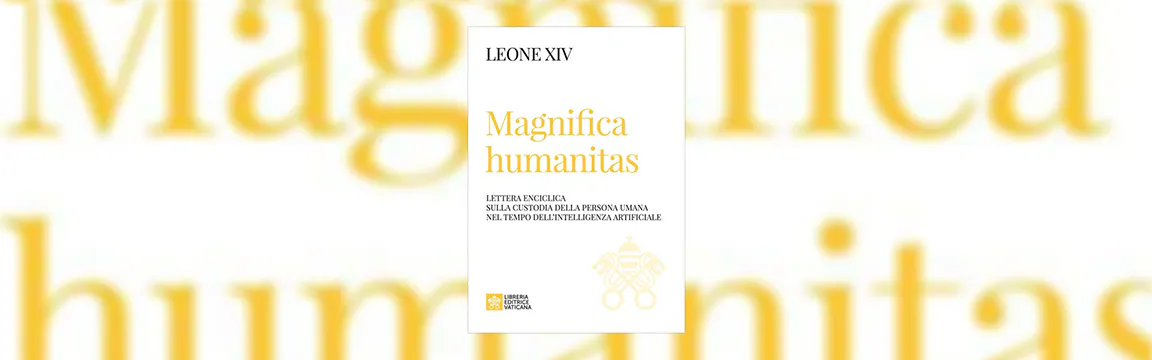
As anyone who took the time to read the nearly 42,000 words signed by Leo XIV on the 135th anniversary of his predecessor Leo XIII's Rerum novarum understood in the following days. Reading through those pages, one encounters something far more uncomfortable than a condemnation: a question. The encyclical, as stated from its opening lines, does not ask whether we are for or against technology. The fundamental choice, the Pope writes, is not between a "yes" or "no" to innovation, but "between building Babel or rebuilding Jerusalem." Between a power and a humanity claiming to rule the heavens, and a people working together to raise the walls of coexistence, guided by a figure who is the true hero of the encyclical: Nehemiah, the 5th-century BC Jew who patiently led the reconstruction of the holy city.
Technology, Leo XIV reminds us, is neither inherently evil nor inherently a solution. But it is not neutral: "It takes on the face of whoever designs it, funds it, regulates it, and uses it." Here is the real question the document poses to governments, businesses, and each of us. Not "is AI scary," but "who governs it, and for whom does it work?" Above all: what role does the protection of individuals and workers play in all this?
It is a question that sounds strangely familiar in Rimini.
The Tool and the End
There is a phrase Vittorio Tadei found at age thirteen, in 1948, walking among the rubble of his bombed house. An open book, a single line: "Man is a manager of the assets at his disposal, not an owner." It was the social doctrine of the Church, though he didn't know it then. He carried it with him all his life, making it the core of a business philosophy.
From that phrase stems the distinction Teddy's founder repeated to his team: "An owner is someone who manages only for personal gain [...], because their goal is purely profit for profit's sake. A manager, on the other hand, is someone who manages and administers in the interest of the common good." Profit, in this vision, is not the end goal; it is a tool. It serves to expand the business, create jobs, and help those left behind.
It is the grammar Leo XIV applies to technology today. Because ultimately, the encyclical is not dedicated solely to AI; it is an update to the entire social doctrine of the Church. The machine, like money, is a means. It becomes Babel when it transforms into an end in itself, when power grows while the heart dries up. It becomes Jerusalem when it remains ordered toward the human person.
Vittorio's Dream, which remains the foundational root of Teddy's mission today, was born long before the digital revolution. Yet it answers the very same question the Pope poses today. Not because Teddy foresaw ChatGPT, but because it focused on the issue underlying every technology: to what end do you subordinate your tools? Who remains at the center when things grow large?
"The Person is the Most Important Thing in a Company"
The encyclical devotes powerful pages to work, picking up the thread connecting Leo XIII to John Paul II and Francis: work is not a cost to compress, but the place where a person gives meaning to life. Leo XIV warns that current AI approaches risk "de-skilling workers," subjecting them to automated surveillance, and forcing them to adapt to machine rhythms instead of designing machines around workers. The proposed rule is simple: technology as addition, not replacement. And it demands "social criteria for innovation": any introduction of automation should be paired with verifiable choices protecting employment and worker participation.
Here, the dialogue with Teddy's experience becomes concrete. When Vittorio chose consignment franchising, his team recalls, "he was already aware that people are the most important part of a company." A network of "entrepreneurs of themselves," inventory risk held by the company rather than dumped on shopkeepers, and profits distributed fairly among partners.
Furthermore, the Dream emphasizes that "through work, one can rediscover personal dignity daily." It is an operational translation of what the encyclical defines as caring for the most vulnerable. It is not merely doing charity alongside business, but within business
Limitation as a Function, Not a Defect
Leo XIV constructs a true "theology of limitation": incapacity, illness, and vulnerability are not design flaws in human beings to be fixed by tech, but the very place where humanity matures and opens up to relationships. "Humanity does not flourish despite limitations, but often through them." Against transhumanist promises of an "enhanced man" freed from all fragility, the Pope counters with a raw truth: giving up that journey "might mean anything, but no longer being human."
Seen from Rimini, it is hard not to think of how behind Teddy's Dream lie Vittorio's grief over the loss of his son Gigi. It was that wound—the helplessness of a father who said he had "resources to afford anything," yet "could do nothing for his son"—that transformed a successful entrepreneur into something more. His friendship with Father Oreste Benzi, a "tireless apostle of charity," did the rest.
An embraced limitation does not impoverish; it opens doors. And a company that makes space for fragility is one that understands something no algorithm can calculate.
A Truth Not Possessed, a "Majority Shareholder"
Among the most cited passages internationally is the one on truth as a common good and risks to democracy: AI-multiplied disinformation, the power of platform owners to shape collective imagination, and the danger of a society where truth and falsehood blur. Leo XIV reiterated that the Church "does not wish to raise the flag of possessing truth," because truth is not a territory to defend, but a good to share.
Here too lies a deep resonance with how Vittorio Tadei viewed his role. He considered himself an "administrator of assets" acting on behalf of a "majority shareholder"—God—to whom, he said, he had to "account for the use of talents received." One can read this as a personal religious conviction, which it was. But it also carries a secular translation valid for anyone: no one is the absolute owner of what they manage; we are all temporary stewards of something exceeding and preceding us. This is the posture the encyclical asks of tech power-holders today: not that of an owner disposing of property, but of a steward answering for it.
The Question Preceding the Answer
The sharpest international analysis of Magnifica Humanitas is that it is by no means an "anti-tech" text. On the contrary, it is an affirmative vision: it takes the real harms of technology seriously precisely to insist on making it better, fulfilling the promise of progress serving people rather than power dynamics. Tellingly, at the Vatican presentation, a co-founder of a top global AI company sat alongside the Pope: a sign that the Church seeks not to excommunicate tech, but to call it to greater responsibility.
Teddy Group did not wait for the encyclical to ask Leo XIV's question: it had already written it decades ago on the walls of its Rimini headquarters and handed it to every new employee. The Dream is a corporate culture built around the conviction that a person is never a means—neither for profit nor, today, for the machine.
Keeping the person at the center was hard when competitors were other companies. It becomes the real challenge today, as systems that mimic human language without sharing our emotional, relational, and spiritual horizons begin "building" processes and decisions.
Babel or Jerusalem, writes Leo XIV, "begins within each of us." Vittorio Tadei said it his own way years ago from the Palacongressi stage in Rimini: "The important thing is to find your path, your mission, something that gives meaning to your life." That is the condition for technology—whatever form it takes—to remain in service of the human adventure.