belong to everyone
The unexpected hunger for community
From book clubs to running clubs: the deep need to rediscover a human-scale space and feel part of something
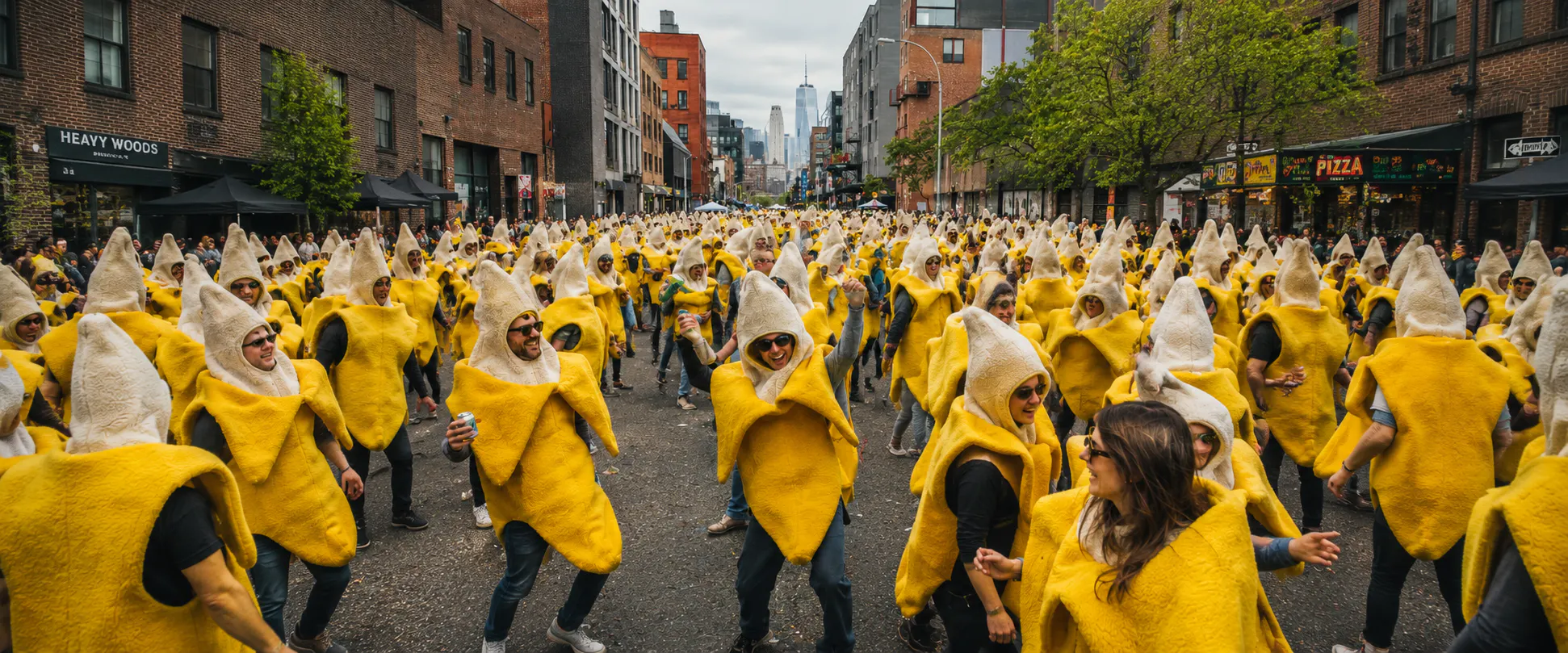
"Man is by nature a social animal". Aristotle wrote this more than twenty-five hundred years ago, and it remains one of those insights that never ceased to be true. The question is understanding through what forms and scales this social nature finds expression today. If recent years have taught us anything, it is that simply being connected to millions of people is not enough to satisfy that fundamental need for community spoken of in Greek philosophy—in fact, at times it makes us feel lonelier than ever.
Over the past two decades, we have witnessed a constant push toward maximum connectivity. Digital architectures trained us to view community as a numerical metric: how many users, how many followers, how much engagement. Yet, just as the potential reach of our relationships hit an all-time high, a silent rift occurred. An increasing number of people began taking the opposite path, abandoning large, impersonal containers to retreat into drastically smaller dimensions—into groups where people meet in person and share the same interests.
This phenomenon spans various domains. In 2024, for instance, participation in running clubs grew by 59% globally, according to Strava's Year in Sport Trend Report, which highlights another key figure: 58% of those who run in groups report making new friends specifically through these clubs. During the same period in Italy, book clubs experienced equally impressive growth. According to the S.T.O.R.I.E. study—the first national survey on Italian book clubs, promoted by the Association of Independent Publishers and presented at the Turin Book Fair in 2025—nearly a third of all mapped reading groups in the country were established between 2024 and 2025.

Looking beneath the surface reveals that each of these activities fulfills a specific hunger. In book clubs, forming a group answers the need to break the isolation of reading and turn it into a space for understanding and dialogue. Readers feel the urge to exchange thoughts, compare their emotions with those of others, and uncover nuances in the story or characters they would never have caught alone. The book becomes a vehicle to mirror oneself in the other and measure one's perspective against the sensitivity of those who turned the same pages.
In modern running clubs, the true driver is the need to turn a solitary effort into a collective experience. By nature an introspective discipline, running finds new meaning in a group: racking up kilometers at the same pace turns a personal challenge into a shared ritual. People run together not to compete, but to support one another, transforming a test of physical endurance into a pure form of camaraderie and empathy.

But why is there a need to feel part of something?
Perhaps because belonging is what gives shape to our identity when the world around us becomes too fragmented. Without a group, a ritual, or a shared code, freedom risks looking a lot like loneliness. Feeling part of a community serves not just to fill free time, but to validate one's presence—knowing there is a place, however small, where your absence would be noticed. For a long time, we sought this answer by joining vast digital arenas. Today, we realize that authentic belonging doesn't work through accumulation, but through proximity. It requires limits, physical presence, and a small enough number of participants for everyone to know each other's name.
Thus, Aristotle's social instinct has by no means weakened in the contemporary world. It has simply stopped seeking quantity and returned to demanding quality in human bonds. It reminds us that to truly feel part of something, we don't need a boundless audience—just a small, real, and shared dimension in which to recognize ourselves once more