belong to everyone
The intelligence that will save us will be profoundly human
The more capable machines become, the more irreplaceable humanity reveals itself to be. This is the concrete challenge awaiting those who lead organizations today.
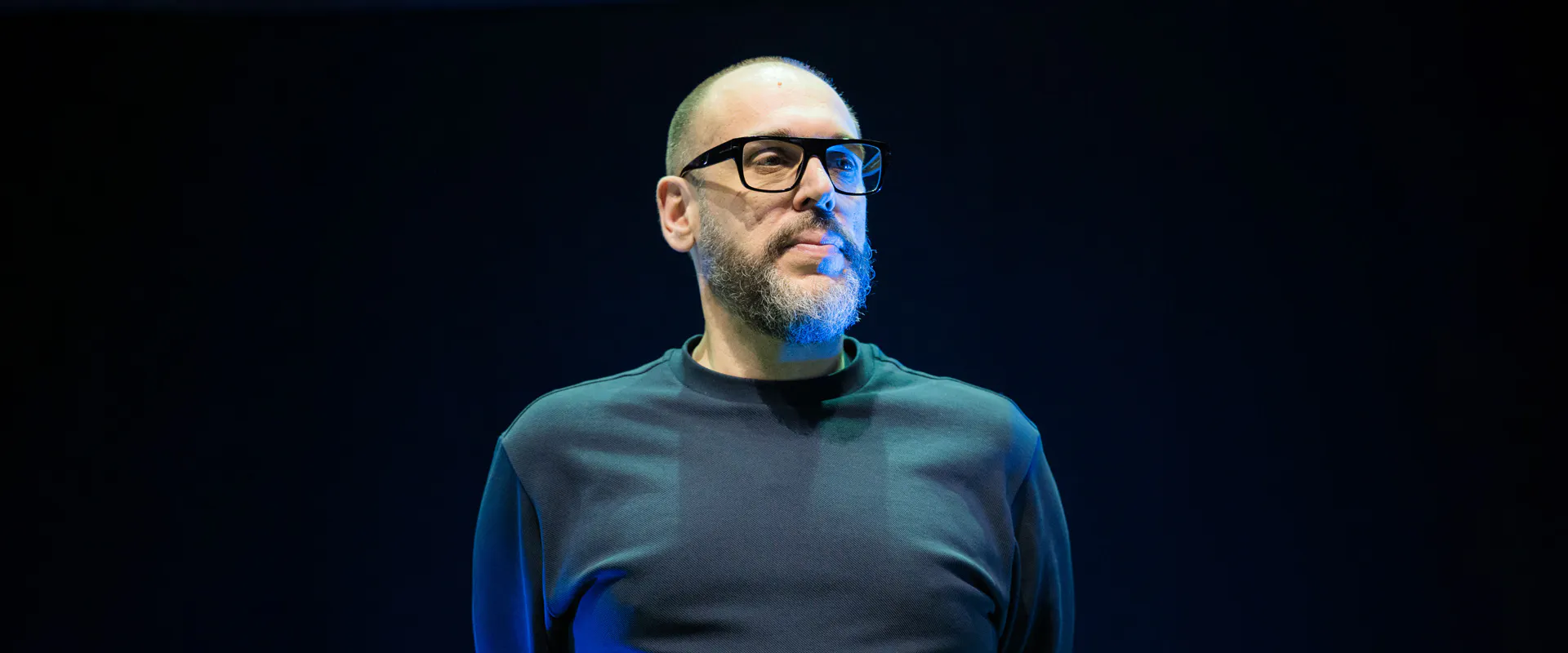
At Belong, we look for those who can view the future of work with curiosity and depth. Cristiano Boscato embodies this drive: CEO and Founder of Dinova—part of the Maggioli Group—and creator of the Interacta platform. As one of Italy's leading experts in Artificial Intelligence and Digital Innovation, he has led some of the country's most relevant digitalization projects, developing an approach that integrates humanistic and entrepreneurial skills into the relationship between technology and the human factor. He is Academic Director and Professor at Bologna Business School, as well as Executive and Educational Director of the Executive Master Teknè 5.0® at Bi-Rex. His new book, Era, Ora (2025, Post Editori), explores the transformation of language in the era of AI and the relationship between technology, enterprise, and humanity.
There is a moment in every revolution when the temptation is to choose a side. Apocalyptic or integrated, as Umberto Eco would have said. In the face of artificial intelligence, we are doing exactly this: dividing ourselves between those who see AI as the end of human work and those who celebrate it as our sole salvation. Yet, while we debate, something has already happened. Silently. Inside the most conscious companies.
The figures of this transition are clear to read. ISTAT noted that in 2025 AI adoption among Italian companies with at least ten employees rose from 8.2% to 16.4% in a single year: doubled. The Artificial Intelligence Observatory of the Politecnico di Milano estimates the market at 1.8 billion euros, up 50%, and reports that 41% of workers, thanks to AI, manage to carry out activities they could not complete on their own. The EY Italy AI Barometer 2025 reveals that 46% of Italian workers already use AI tools at work, compared to 12% the previous year: nearly four times as much in twelve months.
But stopping to celebrate the adoption curve would be the best way to miss what is truly happening.
Not artificial, but augmented
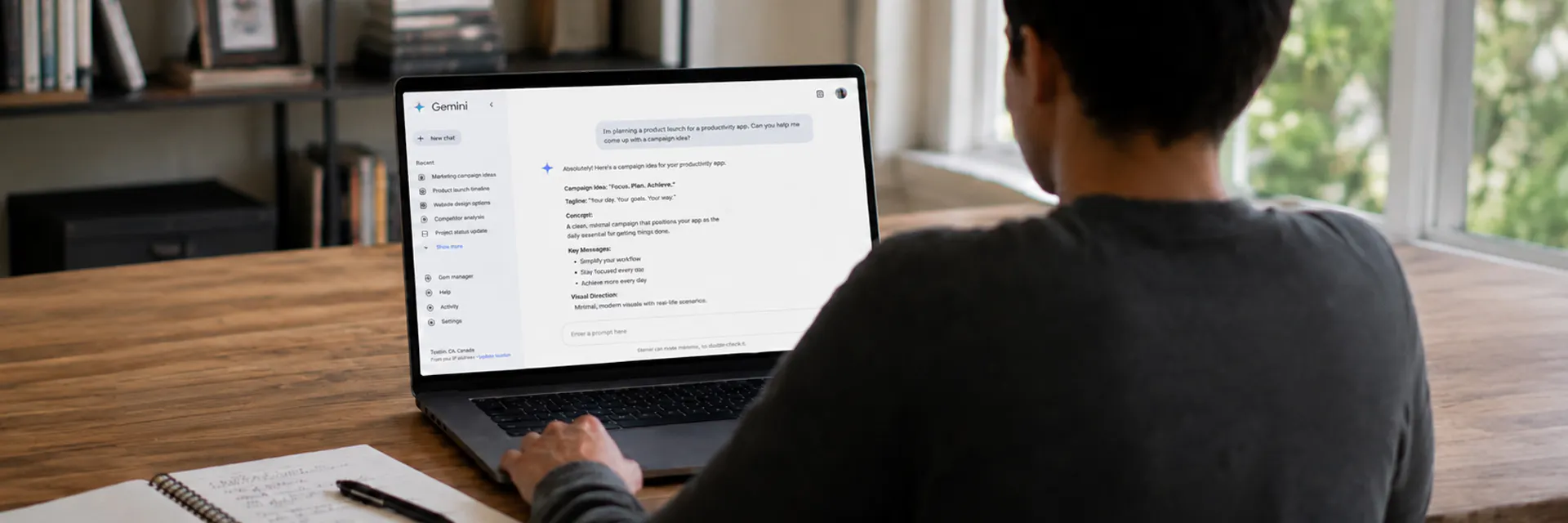
The first thing to do is correct the word. Rather than "artificial," this intelligence is "augmented": it does not replace us, it amplifies what we can do. It seems like a mere lexical nuance, but it changes everything. Because—and here my semiotic training comes into play—language does not describe the world, it generates it. If we call something that dialogues with us in our natural language "artificial," we are already treating it as an oracle to be feared or worshiped. If we call it "augmented," we bring it back to where it belongs: beside us, not in our place.
Within this correction lies a paradox that fascinates me: the more perfect machines become, the more irreplaceable the human dimension reveals itself to be. This is not a consoling phrase; it is an operational observation. When an algorithm writes an email in thirty seconds, summarizes a report in two minutes, or generates three versions of a presentation while you grab a coffee, the only thing that still makes a difference is the quality of the question you asked, the intention you put into it, and the relationship of which that email and report are part. Technology lays meaning bare. It leaves it exposed. And it forces us to ask whether, under the veil of productivity, there was truly something there.
From work as a means to living work
Over the last twenty years we have treated work as a means: exchanging time for money, exchanging energy for results. Augmented intelligence makes this model unsustainable, because that time and energy are now supplied by the machine at costs approaching zero. What remains of the human element in a company?
Everything the algorithm cannot do remains: listening to a colleague who joins a meeting with a different tone of voice, recognizing the right moment to ask or stay silent, nurturing a client relationship over time, sensing a direction before data confirms it. In a word, what remains is "living work": an activity measured not just in performance, but in care, in interpreting reality, in building connections. It is here that the company stops being an output factory and returns to what it should always have been: a living organism made of people talking to each other, feeling, and putting themselves on the line.
A new grammar for leaders
None of this happens on its own. We need leaders capable of constantly changing without losing their humanity: I call them "mutant managers." And we need a new grammar of work. There is a simple rule: anything produced with AI without awareness, without the presenter being able to truly explain it, must be eliminated. Technology cannot be a shortcut, let alone an anesthetic. It must be a stimulus to think better.
In parallel, we must work on words. If a salesperson becomes a "weaver of relationships," they stop chasing orders and start building trust. If a CFO becomes a "sensitive economic director," in addition to reading numbers they begin interpreting the collective well-being of the company. These seem like minor details, but they are tectonic shifts. Words do not describe roles; they create them.
There is a figure that obliges me to mention another aspect: a Harvard study showed that large language models today are understood at 87% by an average American and at barely 13% by an Ethiopian citizen. This means that inside the machine, we have embedded a culture, biases, a perspective. Thinking that AI is neutral is the most innocent of lies. That is why awareness is needed before speed.
The right question to ask now
There is another number from the EY Barometer that struck me most of all: 64% of Italian workers are investing in AI training on their own initiative. We are first in Europe. People have understood, ahead of organizations, that it is time to move. It is up to business leaders not to disappoint them.
The question is no longer "what will AI do?" It is: "what do we choose to do, now that AI does almost everything else?" It is not a dispute to win; it is an opportunity not to waste. The comma in the title of my latest book, Era, Ora, is not a pause: it is the transition between eras. An era has ended. And now we must decide where we want to go.
I believe the direction is clear. Freed from repetition, we are handed back the noblest task: being human. Together. For real. Perhaps even having fun, because at least half of what we do should remain a meaningful game. The intelligence of the future, the one that will truly save us, will be profoundly human. Everything else is just a tool.